
Contents
Overview
Installing a fuel heater requires careful planning and execution to ensure safe and efficient operation. With the right guidance, homeowners and professionals can navigate the installation process with confidence. Fuel heaters are reportedly a popular choice for water heating, offering a reliable solution for domestic and industrial applications. However, improper installation can lead to reduced efficiency, increased energy bills, and even safety hazards. In this article, we will provide comprehensive installation tips for fuel heaters, covering key considerations, step-by-step instructions, and best practices for a successful installation.
🎵 Origins & History
The history of fuel heaters is not well-documented. However, it is known that fuel heaters have been used in various applications. According to some sources, fuel heaters have been used in residential, commercial, and industrial settings.
⚙️ How It Works
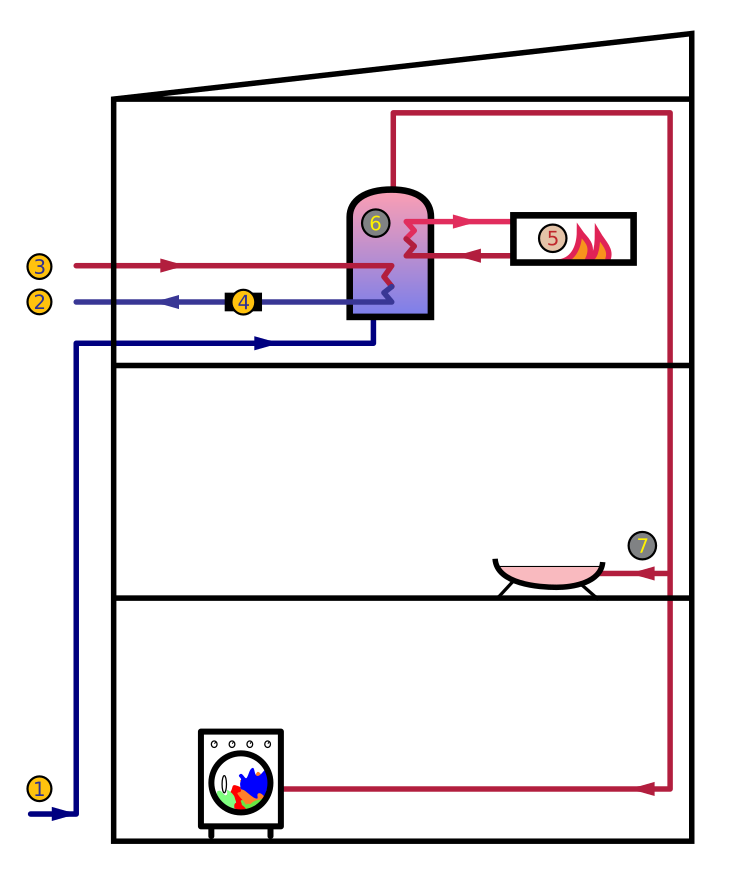
Fuel heaters work by burning fuel, such as natural gas, propane, or oil, to heat water. The heated water is then stored in a tank for later use. The installation process involves connecting the fuel heater to a fuel source, installing a venting system, and connecting the heater to a water supply line. Proper installation is crucial to ensure safe and efficient operation.
📊 Key Facts & Numbers
Key facts and numbers about fuel heaters include: fuel heaters are available in a range of sizes, from 20 to 100 gallons, and can be fueled by natural gas, propane, or oil. ASHRAE notes that fuel heaters are a viable option for buildings with high hot water demands.
👥 Key People & Organizations
Key people and organizations involved in the development and installation of fuel heaters include: plumbers, HVAC technicians, and fuel heater manufacturers. These professionals play a crucial role in ensuring that fuel heaters are installed and maintained properly.
🌍 Cultural Impact & Influence
The cultural impact and influence of fuel heaters can be seen in the way they have become a part of many households and businesses. However, the use of fuel heaters has also raised concerns about energy efficiency and environmental impact.
⚡ Current State & Latest Developments
The current state of fuel heaters is one of ongoing innovation and improvement. Manufacturers are continually developing new and more efficient models.
🤔 Controversies & Debates
Controversies and debates surrounding fuel heaters include concerns about energy efficiency, environmental impact, and safety. Some critics argue that fuel heaters are not as efficient as other types of water heaters.
🔮 Future Outlook & Predictions
The future outlook for fuel heaters is one of continued innovation and improvement. As technology advances, fuel heaters are likely to become even more efficient and environmentally friendly.
💡 Practical Applications
Practical applications of fuel heaters include residential, commercial, and industrial water heating. Fuel heaters are also used in a variety of other applications, such as swimming pools and hot tubs. ASHRAE notes that fuel heaters are a viable option for buildings with high hot water demands.
Key Facts
- Category
- installation
- Type
- topic